The Truth About the Castor Wheel
When most people picture a library ladder, they picture it rolling. There's something undeniably romantic about the image of a grand Georgian library, floor-to-ceiling shelving, and a ladder gliding effortlessly from one end of the room to the other. It's the stuff of films, country houses, and aspirational interiors magazines.
But when it comes to real homes, real budgets, and real day-to-day use, the rolling castor wheel system is a far more complicated proposition than the fantasy suggests. At Bespoke Library Ladders, we've made the deliberate decision not to offer castor wheel systems, and here's exactly why.
What Are Castor Wheels on a Library Ladder?
A rolling library ladder system uses small castor wheels fitted to the base of the ladder. These wheels run along a floor-mounted track or directly onto a timber floor. Typically a brass or steel rail set is set into or flush with the flooring, while the top of the ladder hooks onto an upper rail fixed to the shelving or wall. The combination allows the ladder to slide horizontally along the full length of a bookcase.
It sounds simple. In practice, it is anything but.
The Pros of Castor Wheel Systems
To be fair, there are genuine advantages to rolling ladder systems in the right context.
Mobility across large spans. In a room with wall-to-wall shelving spanning six metres or more, a rolling ladder makes practical sense. A fixed-position leaning ladder would need to be physically lifted and repositioned to reach books at the other end of the room. This minor inconvenience quickly becomes significant when you're doing it repeatedly.
Aesthetic drama. There's no denying that a rolling ladder, gliding smoothly along a track, has a theatrical quality that a leaning ladder simply can't replicate. In a grand library or formal reception room, that drama can be exactly what the space calls for.

Tradition and authenticity. The rolling ladder has genuine historical precedent in Victorian and Edwardian country houses and institutional libraries. For a period property restoration where historical accuracy matters, a rolling system can feel more authentic.
Hands-free movement. When you're carrying an armful of books, being able to nudge the ladder along the rail with a foot or hip, rather than having to reposition it by hand, is a genuine convenience.
The Cons of Castor Wheel Systems
Why we don't offer a Castor Wheel System.
The cost is significant. Quality castor wheels designed for library ladder use, with the correct load rating, smooth movement, and appropriate aesthetic are expensive components. Sourcing a set of four wheels of sufficient quality for a domestic installation easily adds £200–£400 in materials before a single piece of timber has been cut. When combined with the floor track, upper rail, and additional fixings required, the material cost of a rolling system is substantially higher than a fixed-position equivalent.
Floor tracks are invasive and irreversible. The floor track required for a rolling ladder system is not a small addition. It must be fixed to the floor, often requiring it to be set into or recessed flush with the surface to avoid a trip hazard. On an original Victorian or Edwardian parquet floor, marble, or period flagstone, this is an irreversible intervention. The track must be perfectly straight, perfectly aligned with the upper rail, and positioned with millimetre accuracy. Any deviation creates a ladder that rolls unevenly or sticks. Many clients who invest in period flooring, the kind of home where a library ladder makes sense, are understandably reluctant to cut into it.
Installation complexity is considerable. Fitting a rolling ladder system correctly is a fundamentally more complex undertaking than installing a fixed-position system. The floor track, upper rail, and ladder must all be perfectly aligned in three dimensions. The castor wheels must be adjusted for the correct tension and rolling resistance. The upper hook mechanism must allow smooth horizontal movement while maintaining the correct lean angle. Each of these is a separate technical challenge, all adding cost to your library ladder system.
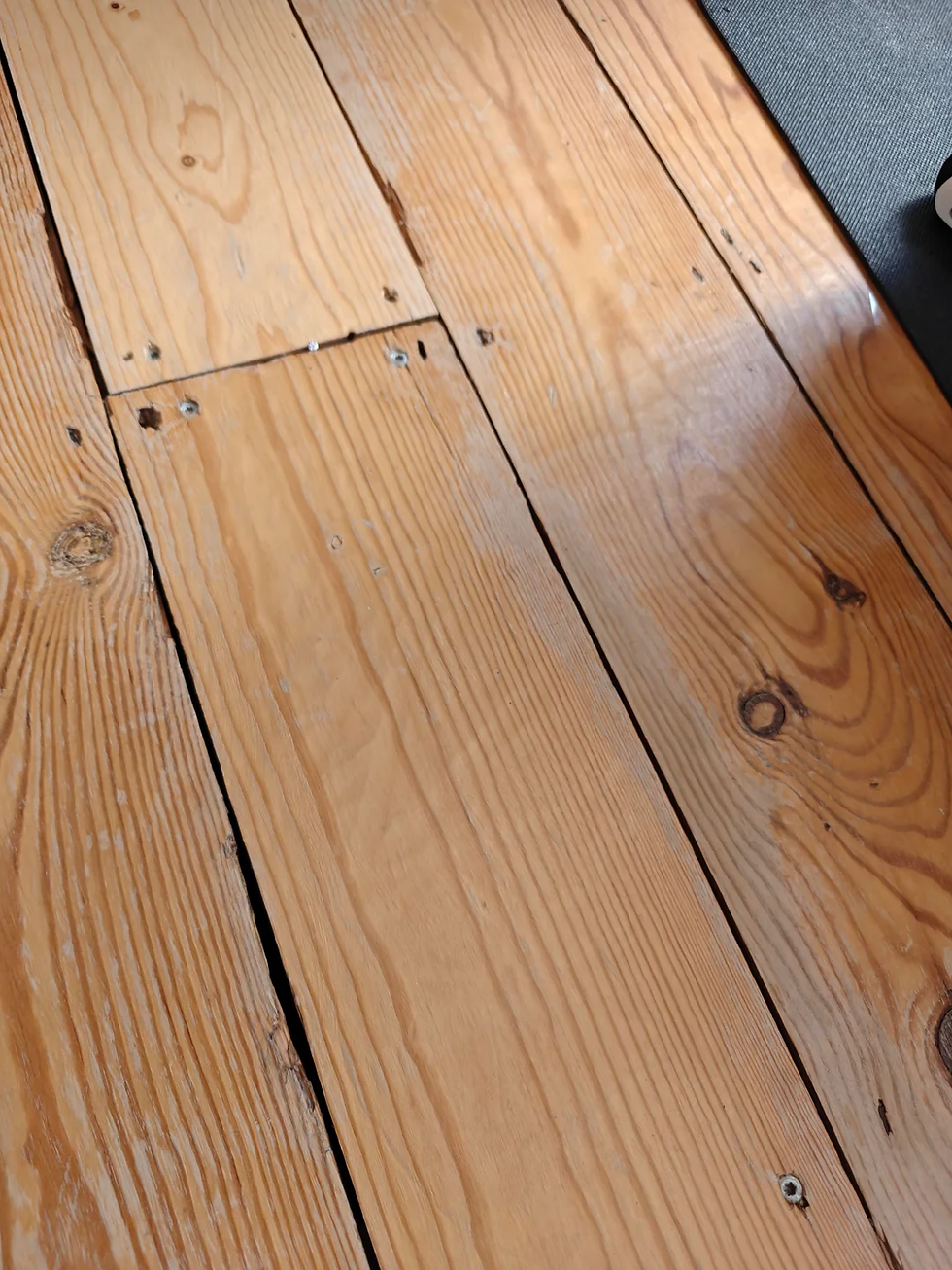
Castor wheels scratch wooden floors. Where people elect to forego their tracks, and use a wheel-on-wood approach, they soon find out that their newly refurbished 1910s solid wood floor has some scratching. Homes spend hundreds of pounds sanding, polishing and varnishing a new floor, to have to repeat the process after a year of rolling a ladder across it.
Wheels add instability. Ladders can already be relatively dangerous items within a home, but when wheels are added to the bottom, it can be asking for trouble. Even on a well-maintained track, a rolling ladder inevitably has lateral play. The tracks must have clearance to allow free movement of the wheel, meaning there is always some level of movement in the wrong directions. Any deviations in the track over time can add to this instability further!
So When Do Castor Wheels Actually Make Sense?
Honestly? In relatively few domestic situations. Rolling ladders come into their own in genuinely large, purpose-built library rooms, spaces with six metres or more of continuous shelving, accessed frequently, and with flooring that can accommodate a fixed track without significant disruption or damage. A dedicated library in a substantial country house, or a formal reading room in a property undergoing complete restoration, might justify the additional cost and complexity.
For the vast majority of home studies, reading rooms, and domestic library spaces, the kind of spaces where a bespoke library ladder genuinely enhances the room. A fixed-position leaning ladder system is not only simpler and more affordable, it's the more considered choice.
The Bespoke Library Ladders Approach
At Bespoke Library Ladders, we design and install fixed-position solid hardwood ladder systems with a fitted wall rail. The 10-degree angle cut on every ladder ensures correct lean against the rail without the need for a floor track. The system is stable, safe, and requires no floor intervention, making it suitable for period properties with original flooring, newly laid parquet, or any surface you'd rather not cut into.
Our systems are a fraction of the price of a rolling system, and are made from solid hardwoods such as oak and walnut, so you don't sacrifice on the quality and aesthetic.
If you're considering a library ladder for your home and want to talk through the options, we'd love to hear from you.
📍 Serving Glasgow, Edinburgh, and across the Scottish central belt
Bespoke Library Ladders is a Scottish craft business handcrafting made-to-measure solid timber library ladder systems. Every ladder is designed, built, and installed by hand.


Comments